

Article: Mosquito Door Nets vs Mosquito Curtains – Which Is Better?

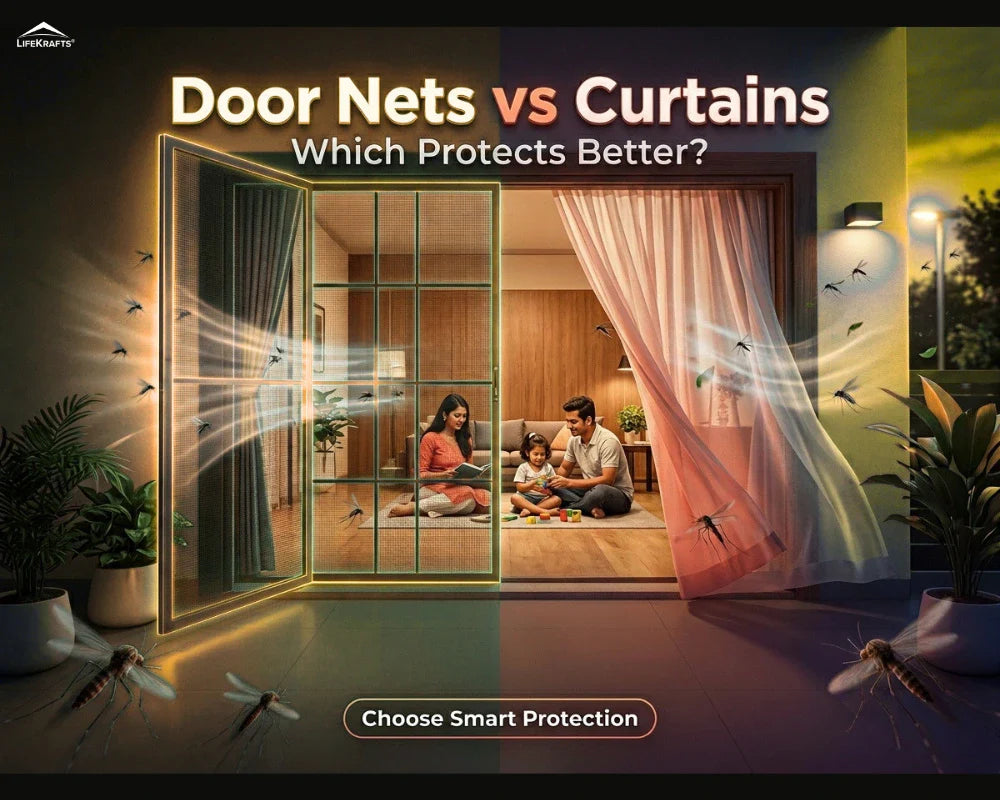
Mosquito Door Nets vs Mosquito Curtains – Which Is Better?
Keeping mosquitoes out of your home is no longer just about comfort; It is also about health, hygiene and peace of mind. With increasing concern about mosquito-borne diseases and growing awareness of chemical-free solutions, homeowners are actively seeking effective physical barriers. Two of the most popular options are mosquito nets and mosquito curtains. Although both aim to solve the same problem, they differ significantly in design, performance and long-term value. This article compares the two in detail to help you make an informed, practical choice.
Understanding the Problem Mosquitoes Create Indoors
Mosquitoes mainly enter homes through doors, windows, balconies and frequently used entry points. Once inside, they disturb sleep, spread infections and make living spaces uncomfortable. Sprays, coils and vaporizers can provide temporary relief, but they add chemicals to the indoor air and require frequent replacement. This is why physical barriers such as mesh-based mosquito nets and mosquito curtains are increasingly preferred.
What Are Mosquito Door Nets?
Mosquito nets are mesh screens placed over doors to prevent mosquitoes and other insects from entering, while allowing fresh air and natural light to pass through. They are usually attached to the frame using magnets, Velcro or sliding mechanisms, depending on the type of door and the user's preferences.
A big advantage of mosquito nets is that they work continuously without the need for electricity, chemicals or daily effort. Once installed, they create a reliable shield that fits seamlessly into daily routines.
What Are Mosquito Curtains?
Mosquito curtains are fabric or mesh curtains that are usually hung over doors using rods or hooks. These are easy to install and remove and are often chosen for temporary use or rental properties. Although they do detect mosquitoes to some extent, they act more as a hanging barrier than a sealed solution.
Curtains can be pulled to one side, tied back or closed manually, making them less effective when moving in and out of the room frequently.
Comparison: Mosquito Door Nets vs Mosquito Curtains
Effectiveness Against Mosquitoes
Mosquito door nets are designed to fit tightly over door frames, leaving minimal gaps. This significantly reduces the chances of mosquitoes sneaking in. Curtains, on the other hand, often leave openings at the sides or bottom, especially when disturbed by airflow or movement.
Ease of Daily Use
For households with children, pets, or frequent visitors, ease of use matters. Magnetic and sliding net doors close automatically, ensuring protection even if someone forgets to shut them. Curtains require manual adjustment every time, which can become inconvenient.
Durability and Maintenance
Door nets are usually made from fiberglass or polyester mesh that can withstand daily use. They are washable and designed for long-term installation. Curtains may tear more easily, lose shape, or need frequent washing due to dust and handling.
Aesthetic Appeal
Modern mosquito door nets are available in sleek designs that blend with interiors and door frames. Curtains may look bulky or out of place, especially in modern homes, and can block light if not properly designed.
Cost and Long-Term Value
Curtains are cheaper upfront, making them attractive for short-term use. However, their shorter lifespan and lower effectiveness can make them less economical over time. Mosquito nets may cost more initially but offer better value due to durability and performance.
Which Option Is Better for Your Home?
If you are looking for a long-lasting, low-maintenance and highly effective solution, mosquito nets are the best option. They are ideal for front doors, balcony entrances and all areas with frequent movement. Mosquito curtains may be suitable for temporary needs or rooms with limited use, but they fall short in everyday practicality.
Homes in mosquito-prone areas benefit more from stationary or magnetic net systems that operate passively throughout the day. Families with children, elderly members or pets especially appreciate the reliability of a net that closes automatically.
Installation Considerations and Environmental Health Benefits
Before choosing, consider the type of door you have – wood, aluminium, sliding doors or French doors. Bespoke mosquito nets can be made to fit different door sizes and styles, ensuring maximum protection without compromising ventilation. Professional installation further improves sealing and durability.
Use of physical barriers reduces reliance on chemical repellents. This improves indoor air quality and reduces exposure to substances that can cause allergies or respiratory problems. Over time, choosing mosquito nets supports a more environmentally friendly lifestyle by reducing waste from disposable mosquito products.
Conclusion
When comparing mosquito nets and mosquito curtains, the difference lies in efficiency, convenience and long-term satisfaction. Curtains may seem simple, but they often require constant adjustment and compromised safety. Mosquito net offers a more holistic, problem-solving approach that suits the needs of modern life.
For homeowners who want a reliable solution that works quietly in the background, mosquito netting appears to be the best investment.
Frequently Asked Questions (FAQs)
1. Are mosquito door nets suitable for all types of doors?
Yes, they can be customized for main doors, sliding doors, balcony doors, and even French doors.
2. Do mosquito curtains completely stop mosquitoes from entering?
They reduce mosquito entry but are less effective due to gaps and frequent movement.
3. How long do mosquito door nets typically last?
With proper care, quality nets can last several years without losing effectiveness. (Based on usage)
4. Can I wash mosquito nets at home?
Yes, most nets are washable and easy to maintain using mild soap and water.
5. Are mosquito door nets safe for children and pets?
Absolutely. They are chemical-free and designed to be safe for everyday household use.

Written by LifeKrafts Admin